

Architectural Animation Services: What Your Project Costs Per Second
The Cost-Per-Second Calculation
The cost per second of an architectural animation services project is not a fixed rate multiplied by duration. It is:
Total project fee ÷ Total finished seconds = Cost per second
The total project fee is the sum of: modelling time (building and environment geometry), animation time (camera path choreography, entourage animation, lighting transitions), render time (cloud farm cost at the resolution and quality spec), and post-production time (colour grade, titles, voiceover, music, delivery formats).
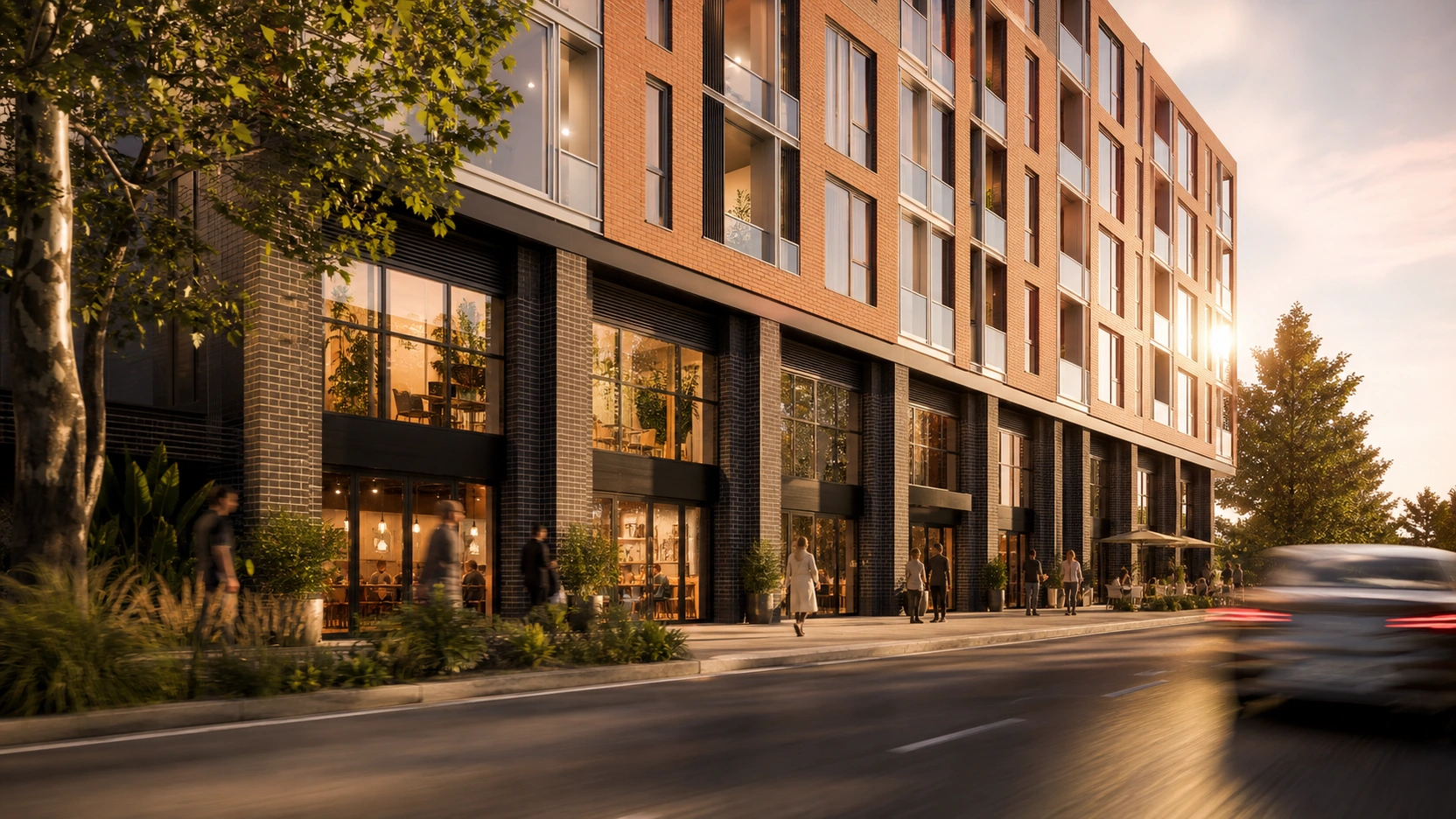
A 90-second animation that is an exterior fly-around of a simple residential building, one camera path, clear sky background, minimal entourage, 1080p, no interior scenes, sits at the lower end of cost per second. A 90-second animation that combines 30 seconds of exterior context, 30 seconds of interior sequences across four rooms, and 30 seconds of branded motion-graphics reveal sits at the upper end, because modelling, render time, and post-production are all materially higher. Both are 90 seconds. The cost per second is not the same.
Understanding which side of each variable your project sits on before briefing a studio is the difference between an accurate budget and a quote that requires revision.
The Four Production Tiers (GBP 2026)
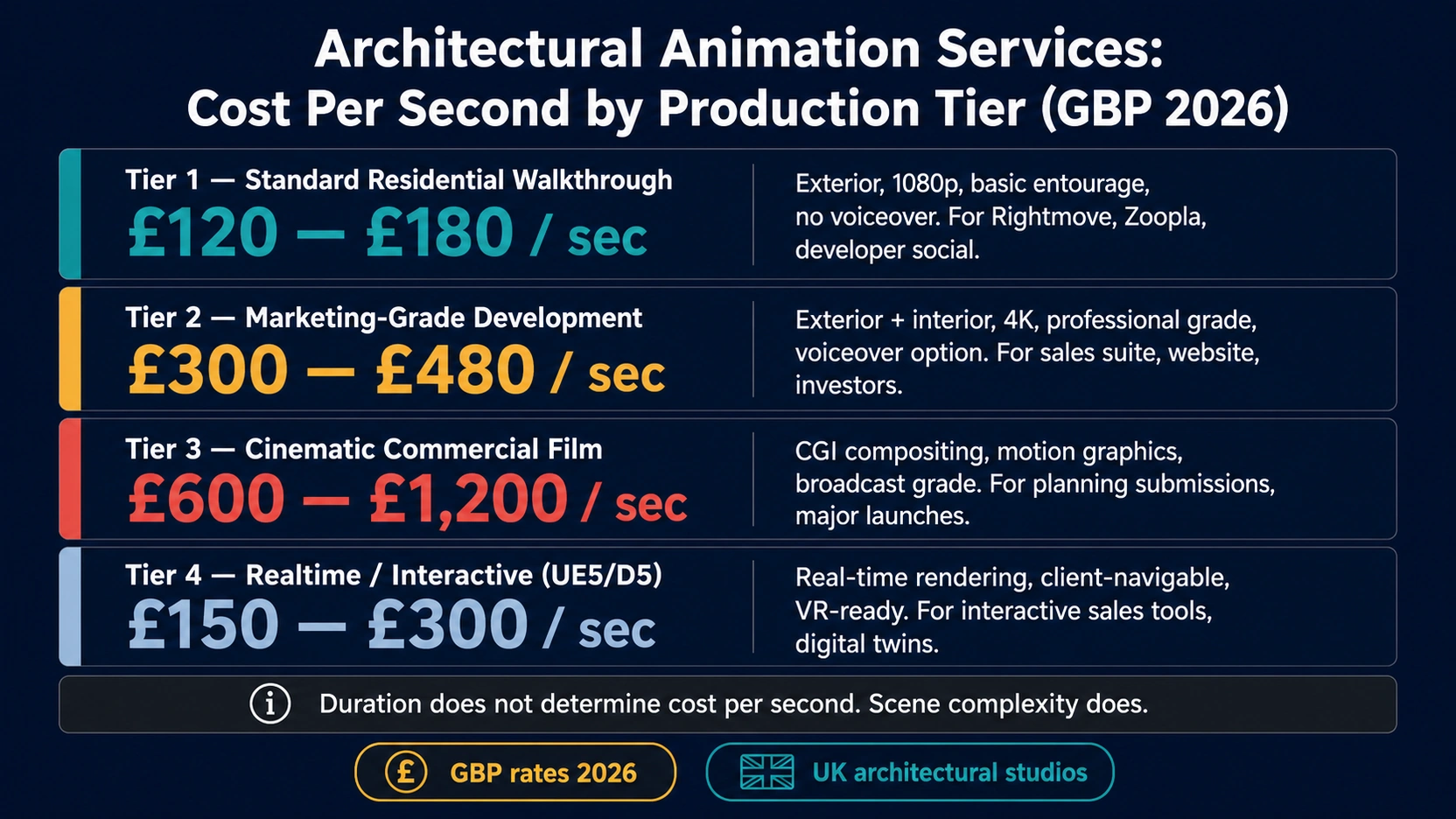
Tier 1, Standard Residential Walkthrough
Cost per second: £120, £180
One primary building or space. Exterior fly-around or a simple interior walkthrough. Clean sky background, basic three-species entourage, daylight lighting with no transition. 1080p resolution. Standard colour grade. No voiceover. Licensed music. Delivered as MP4 for web and portal use.
Typical use cases: Rightmove and Zoopla video listings, estate agent presentations, social media clips for residential developments. At 90 seconds: £10,800, £16,200.
Tier 2, Marketing-Grade Development Animation
Cost per second: £300, £480
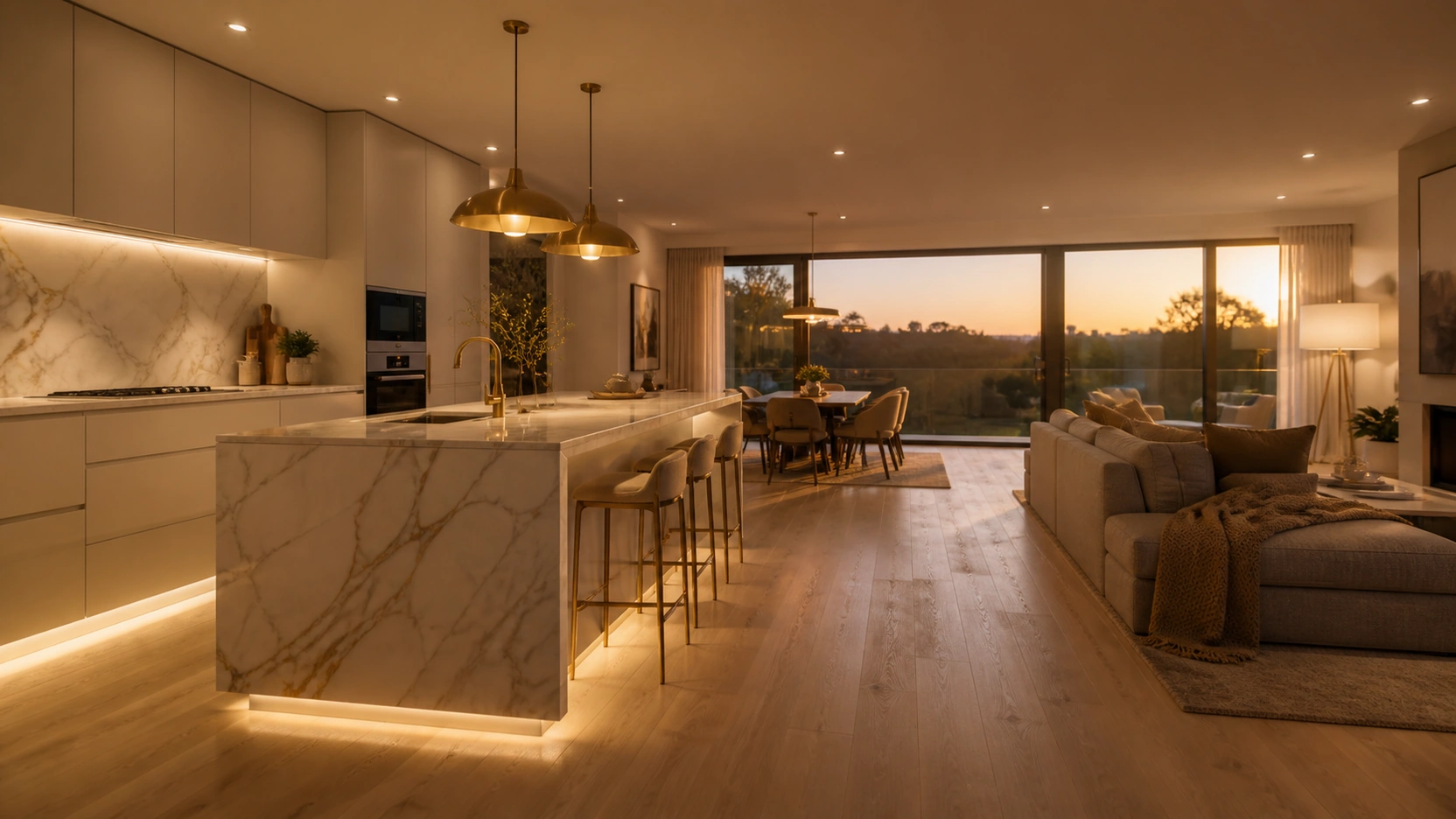
Multiple environment types: exterior context, interior rooms, public realm, or aerial flyover. Detailed entourage: varied species at natural heights, people groups in motion, vehicles, public realm furniture. Day and evening lighting scenarios within the same film. 4K resolution. Professional colour grade. Licensed music. Voiceover option (£400-£900 for professional talent, 90-second script at 120 words per minute = 180 words). Delivered in multiple formats for web, broadcast, and social.
Typical use cases: sales suite screens, development website hero films, investor presentations, launch events. At 90 seconds: £27,000, £43,200. At 3 minutes: £54,000, £86,400.
Tier 3, Cinematic Commercial Property Film
Cost per second: £600, £1,200
Complex CGI environments with motion-tracked aerial reference footage composited against the CG building. Multi-camera narrative across exterior, interior, and public realm. Full post-production: colour science, sound design, motion graphics, broadcast colour mastering. RICS-standard planning authority CGI sections if required. Delivered as DCI 2K or 4K ProRes master.
Typical use cases: planning authority submission films for landmark developments, luxury residential flagship launches, major commercial property investment pitches. At 2 minutes: £72,000, £144,000.
Tier 4, Realtime / Interactive (Unreal Engine 5 / D5 Render)
Cost per second: £150, £300 (for equivalent walkthrough scene count)
Building geometry imported into Unreal Engine 5 or D5 Render. Lighting handled by real-time global illumination (Lumen for UE5) rather than offline ray tracing. Frame output at near-real-time speeds. The material fidelity ceiling, while high, is below the best offline V-Ray 7 or Corona 12 work at matching budgets. Enables interactive deliverables: a client-navigable walkthrough where a sales consultant can pause, rotate, or navigate to a specific room on demand.
Typical use cases: sales suite interactive screens, VR headset presentations, digital twin previsualisations.
The Invisible Cost Driver: Frame Render Time
Every second of a finished architectural animation at 25 frames per second contains 25 individual frames. Every frame is a full photorealistic still render. The time to produce one frame determines the entire production economics of the project.
What Changes Frame Render Time
| Factor | Simple Scene | Complex Scene |
|---|---|---|
| Scene geometry | Single building, clear site | Dense urban context, 200-400m surroundings |
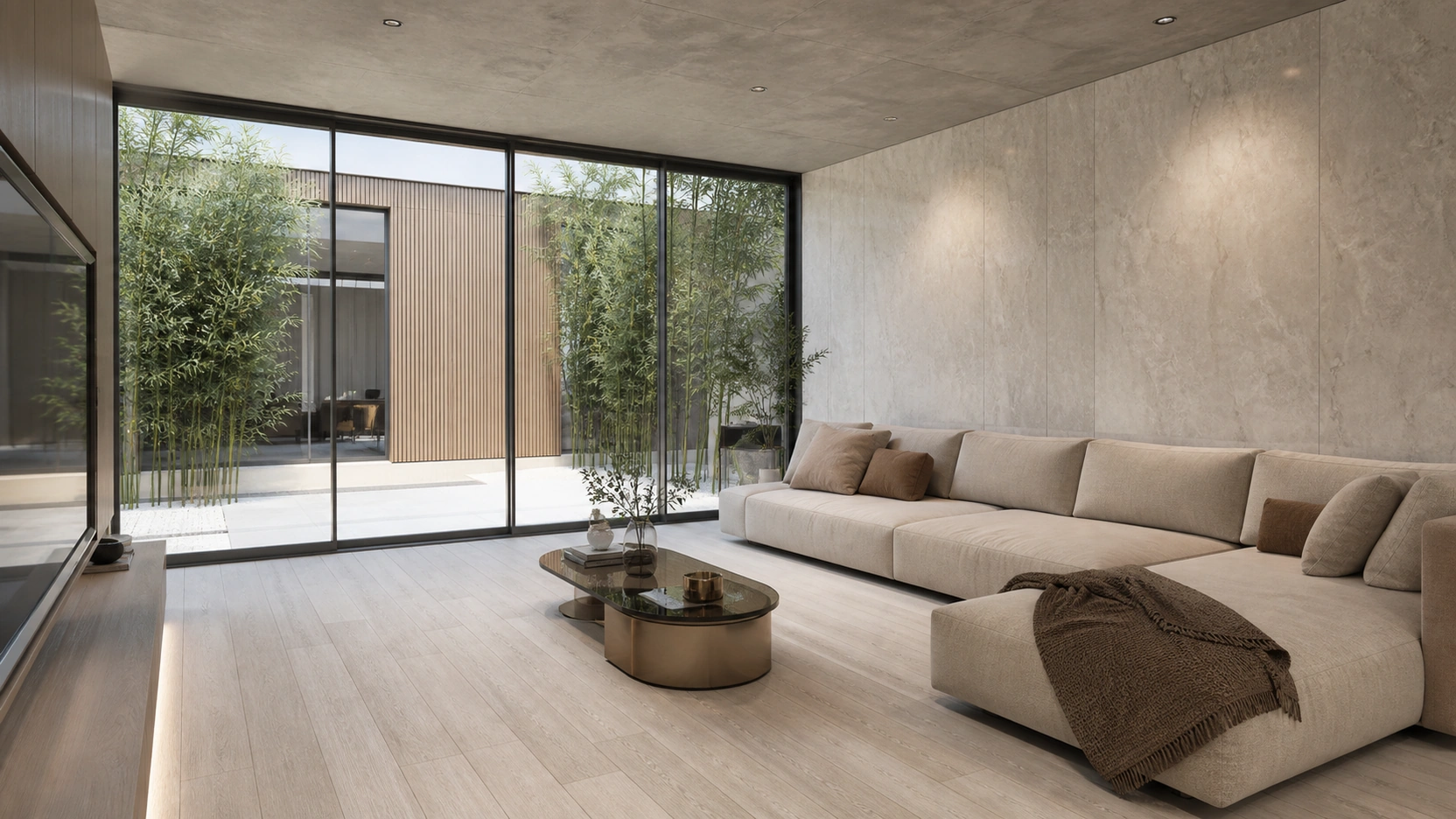
| Materials | Flat facades, simple glass | Wet stone, layered glass reflection, metal, patterned tile |
| Lighting | Single daylight sun-sky | Multi-source interior: IES fixtures, bounce, ambient + exterior |
| Entourage | 3 tree assets | 40+ species, animated people, vehicles |
| Resolution | 1080p | 4K |
| Render time per frame | 2-4 minutes | 45-90 minutes |
At 25fps, 1 second of finished video = 25 frames:
- Simple 1080p scene: 25 x 3 min = 75 minutes per second on one workstation
- Complex 4K scene: 25 x 60 min = 25 hours per second on one workstation
- Complex 4K scene on cloud farm (100 nodes): approximately 15 minutes per second at additional cloud compute cost
Cloud render farm cost for a complex 4K 3-minute architectural animation services project on 100 nodes: typically £800-£3,000 depending on scene complexity and render quality settings. This cost is included in Tier 2 and Tier 3 project fees.
The Frame Rate Decision
Most architectural animation services studios produce at 25fps, the UK broadcast and web standard. Some produce at 30fps (North America standard, some social platforms). The shift from 25fps to 60fps multiplies the frame count by 2.4x for the same duration.
At a complex 4K specification:
- 25fps, 90 seconds: 2,250 frames at 60 minutes each = 5,625 hours of compute (farm-distributed)
- 60fps, 90 seconds: 5,400 frames at 60 minutes each = 13,500 hours of compute (farm-distributed)
60fps is the appropriate specification for interactive and VR deliverables built in Unreal Engine 5, where real-time rendering absorbs the frame rate increase. It is not the appropriate specification for offline-rendered V-Ray or Corona architectural animation services at Tier 1 or Tier 2 unless the budget explicitly accounts for the 2.4x render cost increase.
Specifying 60fps for a photorealistic offline-rendered architectural animation without a corresponding budget increase either reduces quality (through lower per-frame render settings) or increases cost substantially.
Duration Brackets and What Fits in Each
Short-Form (60-90 Seconds)
Primary space or building. One camera path, one lighting scenario. No voiceover or minimal title cards. For: Rightmove/Zoopla video listings, developer social media (LinkedIn, Instagram Reels), pre-launch teasers. Most Tier 1 residential projects sit in this bracket.
Mid-Form (2-3 Minutes)
Multiple environments or views. One or two lighting scenarios. Voiceover narration at 120 words per minute (a 3-minute video = 360-word script). Title cards, animated branding, licensed music. For: sales suite screens, development website hero films, investor day presentations. Tier 2 marketing-grade projects typically fall here.
Long-Form (4-6 Minutes)
Full site context including surroundings and public realm. Aerial views, exterior sequences, interior sequences, branded post-production. Narration, motion graphics, full sound design. For: planning authority submissions, landmark project documentations, commercial property investment pitches. Tier 3 cinematic projects sit here.
The cost multiplier from short-form to long-form is not proportional. A 3-minute animation does not cost double a 90-second animation at Tier 2. It costs more because longer films also include more environment types, more scene changes, and higher post-production complexity, not simply more of the same simple scene.
Brief Checklist for an Accurate Quote
Before briefing an architectural animation services studio:
- Duration target: 60-90 seconds / 2-3 minutes / 4-6 minutes
- Environment types: exterior only / exterior + interior / exterior + interior + public realm + aerial
- Number of interior spaces: each room is a separate environment build
- Lighting scenarios: daylight only / daylight + evening / full day-night transition
- Resolution: 1080p / 4K (with awareness of render cost implications)
- Frame rate: 25fps (standard) / 30fps / 60fps (interactive/VR only)
- Voiceover: yes (provide script or word count) / no
- Music: licensed track (included in studio fee) / bespoke composer commission (additional)
- Post-production: standard grade / broadcast master / motion graphics
- Delivery formats: MP4 web / ProRes master / social compressed versions
- CAD files: DWG/DXF floor plans and elevations or model files in .FBX / .OBJ
At RenderInfinity, every architectural animation services brief is reviewed for environment count and scene complexity before quoting, because duration alone does not determine production cost.
For how architectural walkthroughs integrate with a full development marketing pack alongside exterior renders and floor plans, see our post on 3D exterior rendering services: 2026 pricing and timelines.
For what a handoff checklist for a 3D walkthrough production looks like, see our post on 3D architectural walkthrough services: handoff checklist.
Quick Reference
- Architectural animation services in 2026 are priced by production tier, not duration alone. Four tiers in GBP: Standard residential (£120-£180/sec), Marketing-grade development (£300-£480/sec), Cinematic commercial (£600-£1,200/sec), Realtime/interactive UE5 (£150-£300/sec). A 90-second standard residential walkthrough: £10,800-£16,200. A 3-minute marketing-grade development animation: £54,000-£86,400.
- The invisible cost driver is frame render time, not duration. At 25fps, 1 second = 25 frames. A simple 1080p scene: 2-4 minutes per frame. A complex 4K scene (urban context, IES lighting, dense entourage): 45-90 minutes per frame. On a 100-node cloud farm, a complex 4K second costs approximately 15 minutes of compute time. Cloud farm cost for a 3-minute complex 4K animation: £800-£3,000.
- 60fps is the single technical specification that most dramatically multiplies render cost without adding finished seconds. It requires 2.4x more frames than 25fps for the same duration. Appropriate for Unreal Engine 5 interactive and VR deliverables. Not the default specification for standard web or portal architectural animation services at Tier 1 or Tier 2.
- Duration brackets map to brief complexity: short-form (60-90 seconds) for portals and social, mid-form (2-3 minutes) for sales suite and investor use, long-form (4-6 minutes) for planning and major commercial launches. The cost multiplier between brackets is not linear, longer animations are typically also more complex, not simply more of the same scene.
- Eight brief items determine which tier a project sits in before production begins: duration target, environment types and count, interior space count, lighting scenarios, resolution, frame rate, voiceover requirement, and post-production grade. Providing these at brief stage produces an accurate quote. Omitting them produces a quote that changes after the brief review call.
Frequently Asked Questions
How much does architectural animation services cost per second in 2026?
Architectural animation services cost between £120 and £1,200 per finished second in 2026 depending on production tier. Standard residential walkthrough (exterior, 1080p, basic entourage, no voiceover): £120-£180/sec. Marketing-grade development animation (exterior + interior, 4K, professional colour grade, licensed music, voiceover option): £300-£480/sec. Cinematic commercial property film (complex CGI environments, motion graphics, broadcast grade): £600-£1,200/sec. Realtime interactive (Unreal Engine 5 or D5 Render): £150-£300/sec. The tier is determined by scene complexity, not duration.
What makes one architectural animation more expensive per second than another?
Four variables determine per-second production cost: scene complexity (how many distinct environment types, each requiring its own geometry build), render resolution (4K multiplies per-frame render time approximately 4x versus 1080p), post-production requirement (voiceover, colour grade, motion graphics, delivery formats), and frame rate (60fps requires 2.4x more frames than 25fps for the same duration). Two animations of the same length can have radically different per-second costs depending on where each of these variables lands.
How long does it take to produce a 90-second architectural animation?
A 90-second standard residential walkthrough at 1080p from a complete brief: approximately 3-4 weeks. A 90-second marketing-grade development animation at 4K: approximately 5-8 weeks. Production phases are: brief review and model build (1-2 weeks), camera path and lighting development (1 week), render distributed across cloud farm (1-2 weeks at complex 4K spec), and post-production (1 week). Rush delivery carries a 25-50% premium and can compress a standard residential timeline to 2 weeks, but cannot reduce the physical render time for complex 4K scenes below a production floor.
What is the difference between offline-rendered and realtime architectural animation services?
Offline-rendered animation (V-Ray 7, Corona 12) produces each frame independently using CPU or GPU ray tracing. Frame times range from 2-4 minutes (simple 1080p) to 45-90 minutes (complex 4K) per frame. The quality ceiling is higher. Realtime animation (Unreal Engine 5, D5 Render) generates frames at near-real-time speeds using hardware-accelerated global illumination (Lumen in UE5) and can produce interactive deliverables, client-navigable walkthroughs, VR headset experiences, that offline rendering cannot. For portal and sales suite videos, offline-rendered is the quality standard. For interactive sales tools, realtime is the right specification.
What should I include in an architectural animation brief to get an accurate quote?
Specify: duration target, environment types and count (exterior, interior rooms, public realm, aerial, each counted separately), lighting scenarios, resolution (1080p or 4K), frame rate (25fps standard or 60fps for interactive), voiceover requirement, post-production grade, delivery formats, and CAD files in DWG, DXF, FBX, or OBJ format. These eight brief items determine which production tier applies and what the cost per second will be, before a studio has seen the project. Omitting them results in a quote that changes after the brief review call.
Conclusion
Every architectural animation services quote that comes back higher than expected is a response to a brief where scene complexity is higher than the client assumed. Duration is the visible variable. Scene complexity, how many environments, which resolution, what post-production deliverables, is the one that moves the per-second cost.
At RenderInfinity, the brief review call identifies scene complexity before quoting, so the price per second is predictable before production begins. Visit our architectural animation services page to request a brief review or quote for your development.