



Selecting a 3D walkthrough animation company is not something you want to get wrong. A poor choice can mean wasted time, budget overruns, and a final product that doesn’t serve your needs. Whether you’re an architect presenting a concept to a client, a developer marketing a property, or a homeowner visualizing a renovation, the quality of your 3D architectural walkthrough directly impacts how your project is perceived and understood.
The right company doesn’t just produce attractive visuals. They become a technical partner who understands spatial design, lighting, materials, and how to translate architectural intent into a compelling, accurate animation. The wrong one delivers generic results that miss the mark entirely.

A 3D walkthrough animation company creates digital videos that guide viewers through a space that doesn’t yet exist or is still under construction. This involves modeling the architecture in three dimensions, applying realistic textures and lighting, and animating a camera path that reveals the design in a logical, engaging sequence.
These companies work from architectural drawings, CAD files, sketches, or even rough concepts. Their job is to interpret technical documentation and turn it into something visually understandable for clients, investors, or buyers who may not read blueprints fluently.
Beyond the visuals, a good architectural animation company also considers pacing, focal points, and storytelling. The walkthrough should feel natural, as if someone is actually moving through the space, not just flying arbitrarily through walls.

Not every project needs a full walkthrough animation. Static renderings or simple flythroughs may suffice for smaller-scale projects or early design phases. A 3D walkthrough animation makes sense when you need to convey spatial relationships, circulation patterns, or experiential qualities that still images can’t capture.
Real estate walkthrough animation is particularly valuable for pre-sales of residential or commercial developments. It allows potential buyers to experience a property before it’s built, which can accelerate decision-making and increase confidence.
Architects often use 3D walkthrough animation services during design reviews or competition submissions where demonstrating spatial flow and design intent is critical. Homeowners benefit when planning significant renovations, as it helps them visualize changes before committing to construction.
Look for companies that have worked on projects similar to yours in scale, style, and complexity. A firm experienced in luxury residential real estate may not be the best fit for an industrial warehouse project. Review their portfolio specifically for work that aligns with your needs.
Ask about their typical clients and project types. A 3D visualization company that primarily serves game developers will approach architectural work differently than one focused on real estate or urban planning.
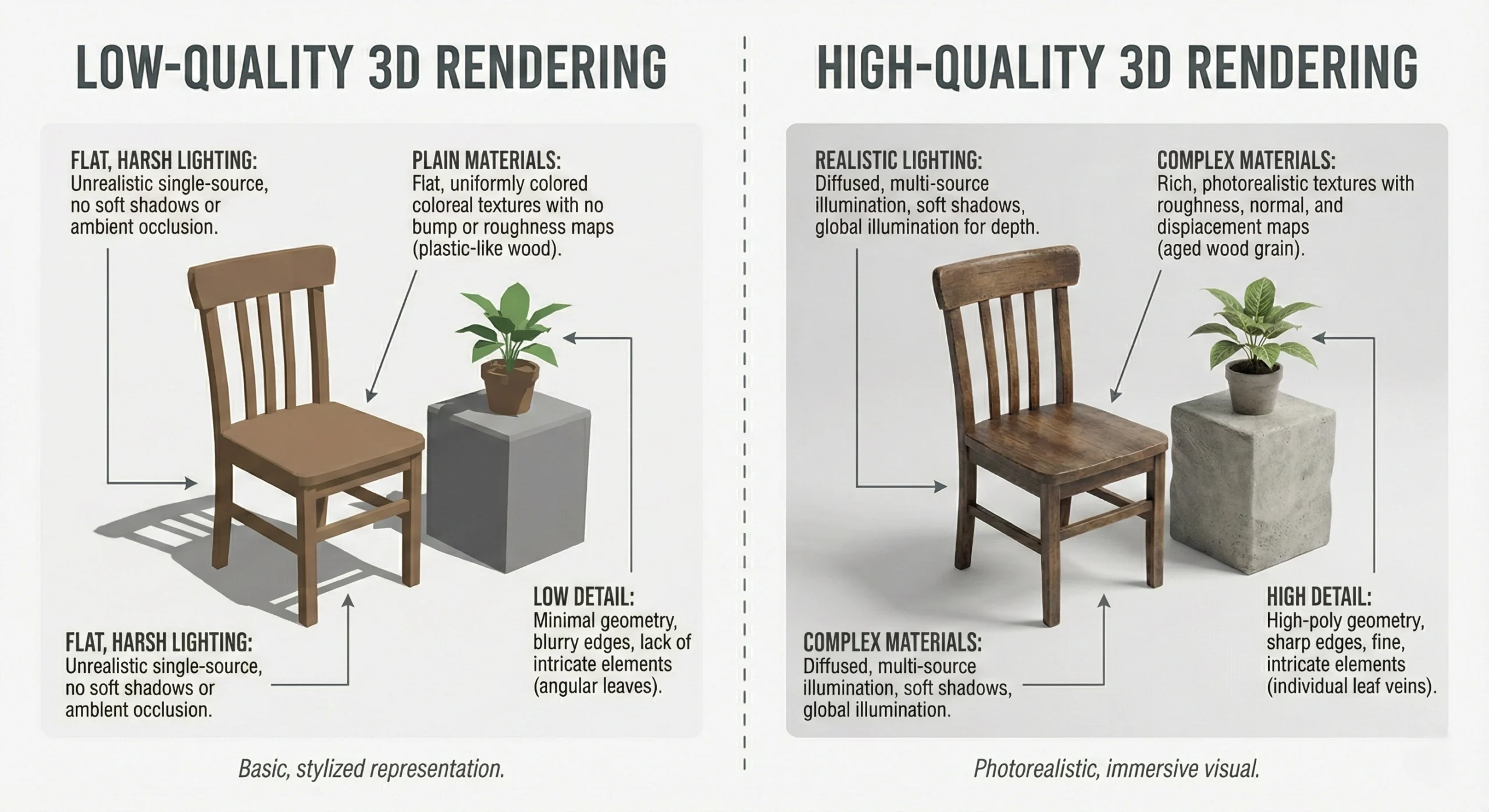
The quality of lighting, materials, and rendering directly affects how believable and useful the walkthrough will be. Poor lighting can make spaces feel lifeless. Unrealistic materials distract from the design itself.
Request samples of completed work at full resolution, not just compressed web videos. Pay attention to details like reflections, shadows, texture resolution, and how furniture and landscaping are modeled. These elements reveal the company’s attention to quality.
A company must be able to read and interpret architectural plans, sections, and elevations accurately. Misunderstanding dimensions, ceiling heights, or spatial relationships leads to animations that misrepresent your design.
During initial conversations, gauge their familiarity with architectural terminology and documentation standards. Do they ask intelligent questions about your drawings? Do they identify potential ambiguities early?
Clarify upfront how revisions are handled. How many rounds are included? What constitutes a minor versus major change? How quickly do they respond to feedback?
A professional 3D walkthrough animation company will have a structured review process with clearly defined milestones. They should provide draft renders or animatics before committing to final rendering, which is time-intensive and costly to redo.
Understand what software they use and whether it’s compatible with your workflow. If you’re providing models from Revit or SketchUp, confirm they can work with those formats without significant translation issues.
Ask about file formats for final deliverables. Will you receive only the final video, or also intermediate assets like still frames or 3D models? Clarify resolution, frame rate, and file size specifications.
Pricing for 3D walkthrough animation services varies widely based on length, complexity, and quality. Be wary of companies that provide quotes without understanding your project scope in detail.
A transparent company will break down costs by elements like modeling time, animation complexity, rendering hours, and revisions. They should also explain how changes to scope affect pricing.
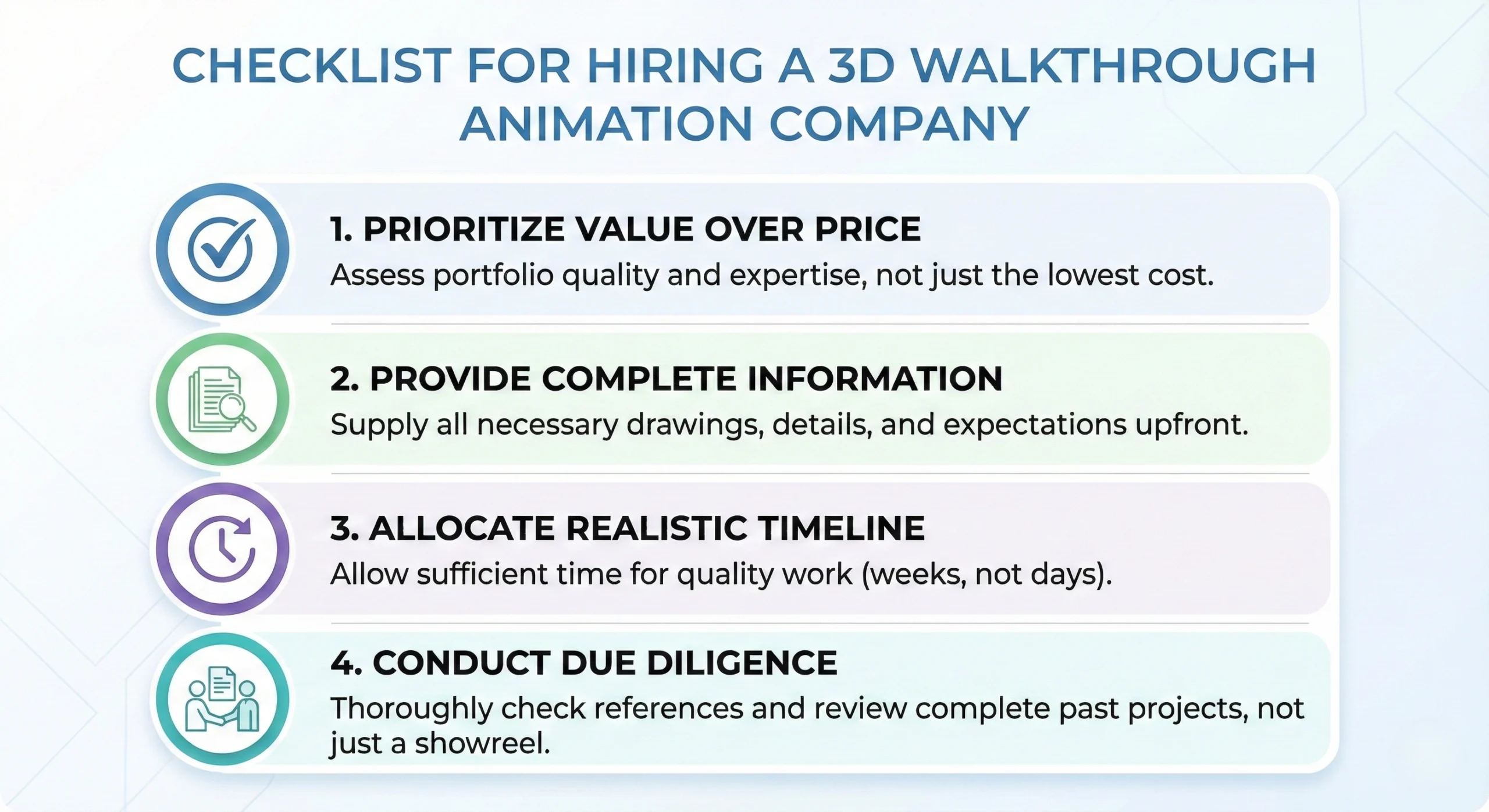
Many clients prioritize price above all else and end up with substandard work that requires redoing. The cheapest option is rarely the best value.
Others fail to provide complete information upfront, leading to misaligned expectations and costly revisions. If you withhold details or provide incomplete drawings, don’t expect the company to read your mind.
Some clients underestimate the time required. Quality 3D architectural walkthroughs take weeks, not days. Rushing the process compromises quality.
Finally, many clients neglect to check references or view complete projects. A flashy showreel might hide inconsistent quality across actual client work.
Prioritize companies that understand design intent, not just technical execution. They should enhance your vision, not impose their own aesthetic. Provide comprehensive documentation and be available for questions during modeling.
Consider establishing ongoing relationships with reliable firms rather than switching providers for every project. Consistency in quality and communication saves time.
Focus on companies experienced in residential work who can communicate in plain language. You shouldn’t need to learn architectural jargon to collaborate effectively.
Don’t assume you need a five-minute cinematic production. A focused two-minute walkthrough highlighting key spaces often works better and costs less.
Real estate walkthrough animation is a marketing tool, so the company should understand sales psychology and staging. They should know how to make spaces feel aspirational while remaining accurate.
Consider the target buyer demographic. Luxury condos require different treatment than affordable housing developments. The company should adapt their approach accordingly.

What is your typical project timeline from start to final delivery? Can you accommodate our schedule?
How do you handle changes during production? What are the associated costs?
Can you provide references from clients with similar projects?
What happens if we’re not satisfied with the final product?
Will we own the final files, or just the rendered video?
What level of input do you expect from us during the process?

Hiring a 3D walkthrough animation company is ultimately about finding a partner who understands your goals, communicates clearly, and delivers work that serves your project’s specific needs. Don’t rush the selection process. Invest time in reviewing portfolios, checking references, and having detailed conversations about workflow and expectations.
The right choice makes your project easier to explain, easier to sell, and more likely to succeed. The wrong choice creates headaches you don’t need. Approach the decision with the same care you’d apply to any other important project consultant, and you’ll find a company that adds genuine value to your work.
If you’re new to this technology, understanding what 3D visualization is and how it works can help you better evaluate what these companies offer and whether their approach matches your project needs.