Call Us
+91 9301723973


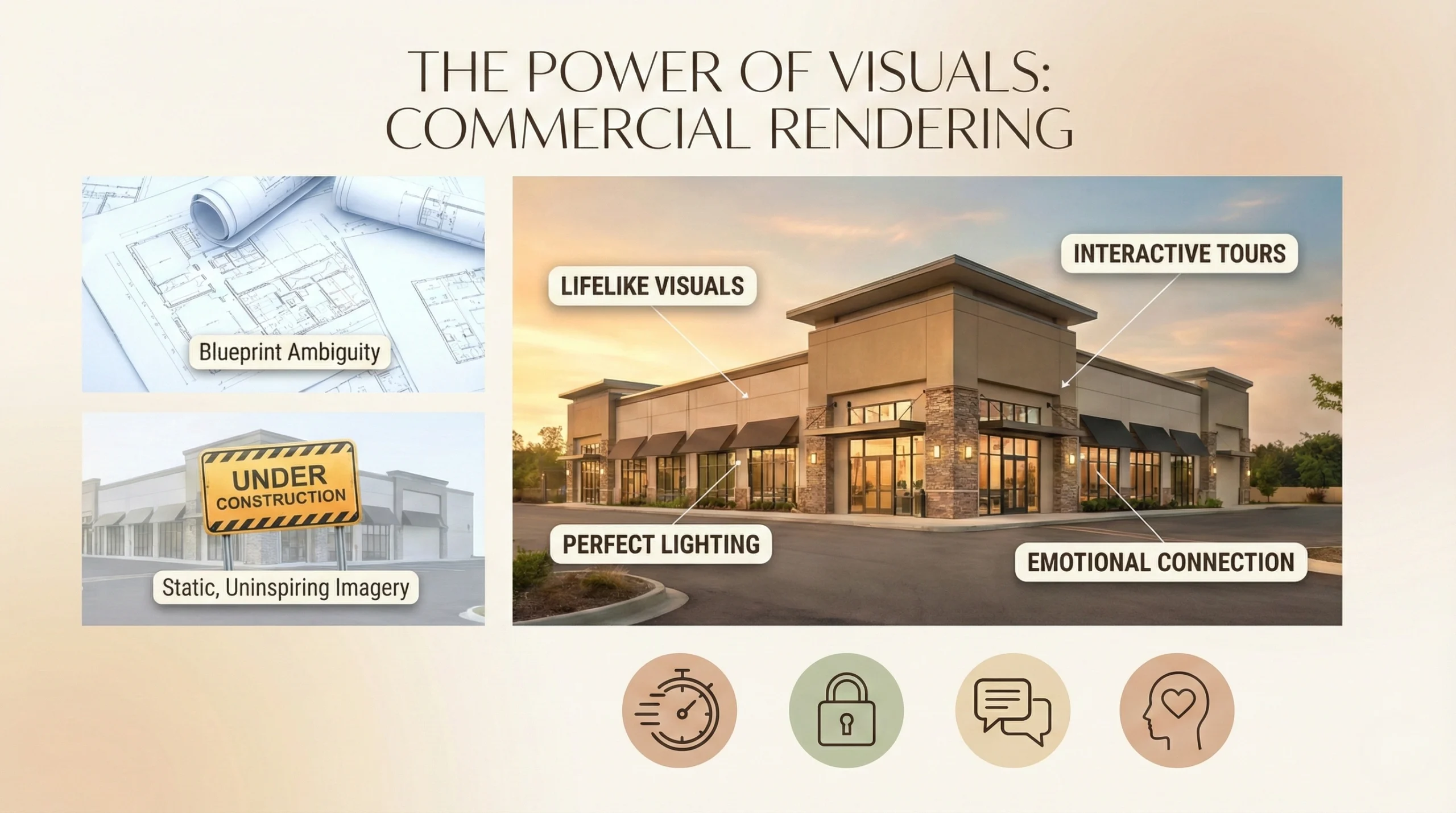
Selling a property that exists only on paper presents a fundamental challenge. Buyers and investors struggle to commit significant capital to something they cannot walk through or physically experience. Traditional blueprints and floor plans require imagination and technical literacy that most buyers lack. Commercial rendering has emerged as the solution to this visualization gap, transforming architectural concepts into photorealistic images that communicate design intent with clarity. This article examines why high-end rendering has become a standard requirement in pre-sales rather than an optional enhancement.
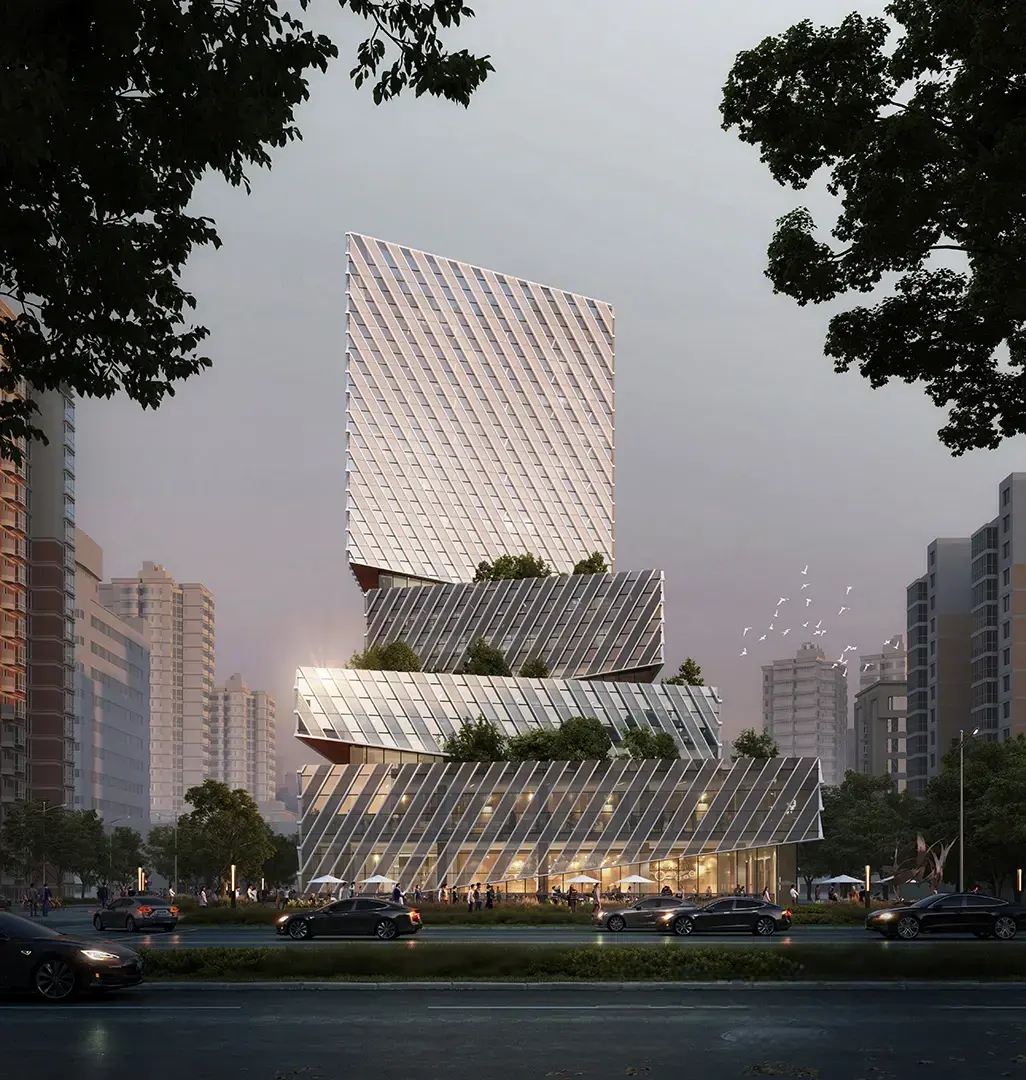
Commercial rendering is the process of creating realistic digital images or animations of buildings before construction begins. The technology converts architectural plans, elevations, and specifications into visual representations that show how a completed project will look.
Not all renders serve the same purpose. Basic renders may show general massing and layout, but high-end photorealistic 3D renders accurately depict materials, lighting conditions, landscaping, and surrounding context. This level of detail matters in pre-sales, where developers sell units or secure investment before construction completes or even begins.
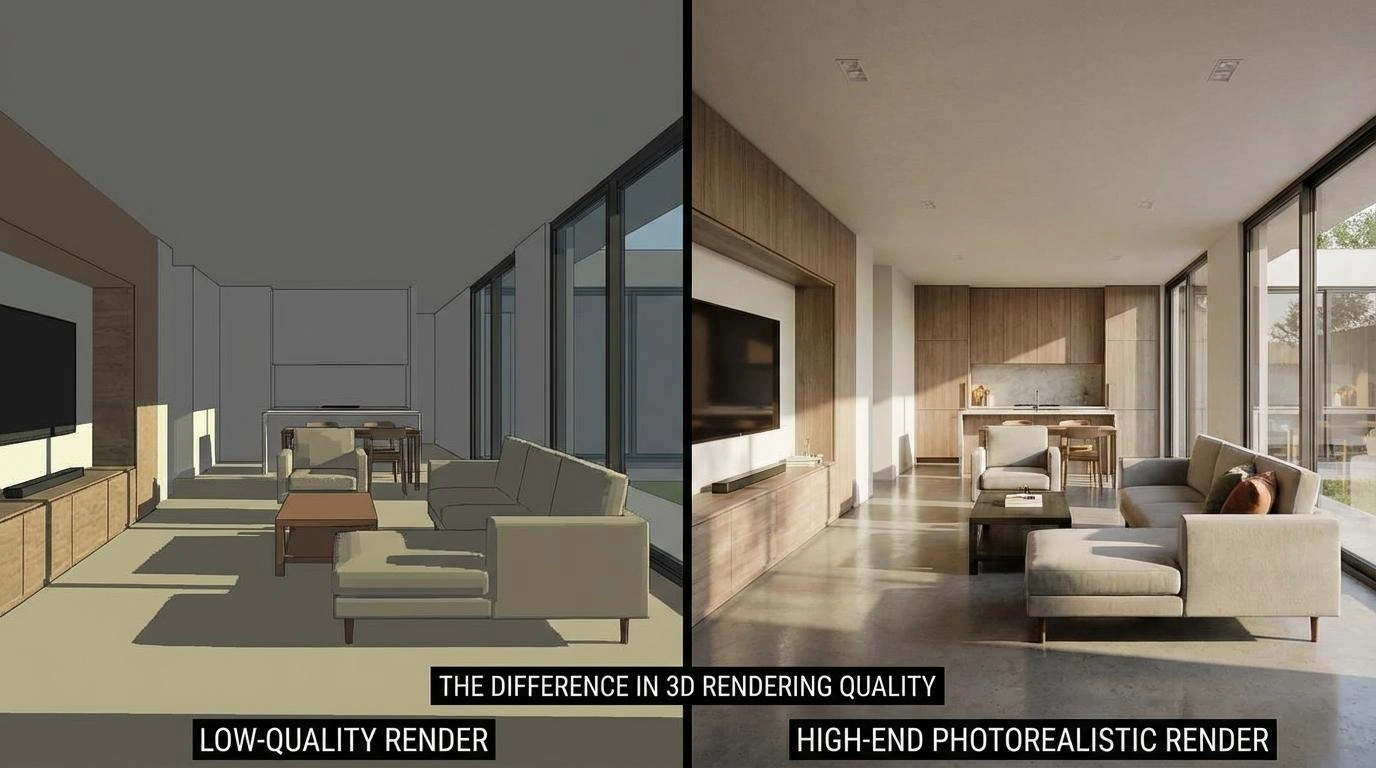
Pre-sales success depends on buyer confidence. When purchasers evaluate off-plan property sales, they assess risk based largely on what they can see and understand. Quality commercial rendering directly influences this assessment by replacing ambiguity with visual certainty.
Buyers need to see before they commit. This psychological reality drives the effectiveness of 3D architectural visualization in reducing uncertainty for purchasers considering off-plan properties.
Quality renders communicate specific elements that answer buyer questions before they arise:
Off-plan sales carry inherent risk for buyers who must imagine the final product. Poor or inadequate visuals amplify this risk, creating doubt that slows decision-making and extends sales cycles. Conversely, comprehensive 3D exterior visualization and interior renders reduce perceived risk by providing visual evidence of what buyers will receive.
The difference between closing a sale and losing a prospect often comes down to how confidently a buyer can picture themselves in the space. Visualization bridges that gap.

Investors and financial stakeholders evaluate projects differently than end buyers. They assess feasibility, design quality, market positioning, and competitive differentiation. Investor presentation visuals must communicate these factors clearly and professionally.
Investors typically review multiple projects simultaneously. Strong CGI for real estate makes individual projects memorable and easier to evaluate. Renders help investors understand scale, design intent, and how a development fits its target market segment.
High-quality commercial rendering supports financial presentations and funding pitches by providing concrete visual evidence of a project’s viability. When developers seek construction financing or equity partnerships, photorealistic renders demonstrate that serious planning and market research have informed the design. This visual professionalism influences funding decisions and partnership terms.
Property development marketing to institutional investors requires materials that match their sophistication and standards. Quality rendering meets this requirement.
Static images show individual views, but 3D walkthrough animation simulates the experience of moving through a space. This movement creates emotional connection by allowing buyers to mentally inhabit the property before it exists.
Walkthroughs prove particularly valuable for remote buyers and international investors who cannot visit a sales center or project site. The animation provides spatial understanding that individual renders cannot fully convey.
These animations complement static renders rather than replacing them. Real estate pre-sales marketing typically uses both: static images for print materials and quick digital reference, animations for immersive presentations and virtual tours. Each format serves specific purposes in the sales process.

Beyond marketing, commercial rendering plays a practical role in securing architectural design approval from planning committees, municipal bodies, and other stakeholders.
Planning authorities often respond more favorably to visual presentations than technical drawings alone. Renders show how a proposed building relates to its existing environment, including neighboring structures, streetscapes, and community character. This context helps reviewers assess whether a project fits local planning objectives.
Clear visualization reduces misunderstandings and objections during the approval process. When all parties can see the same vision, discussions focus on substantive design issues rather than interpretation of technical documents. Faster approvals contribute to better project timelines and reduced holding costs.
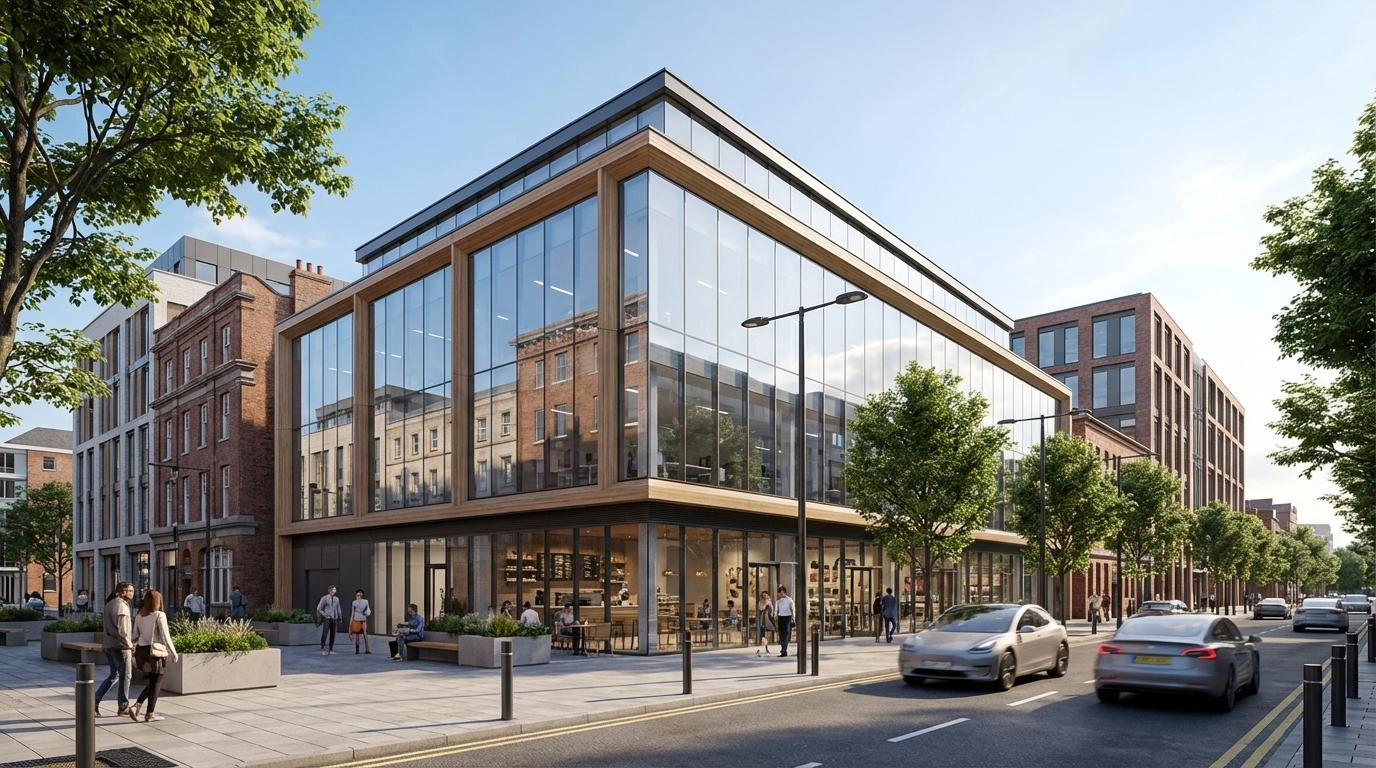
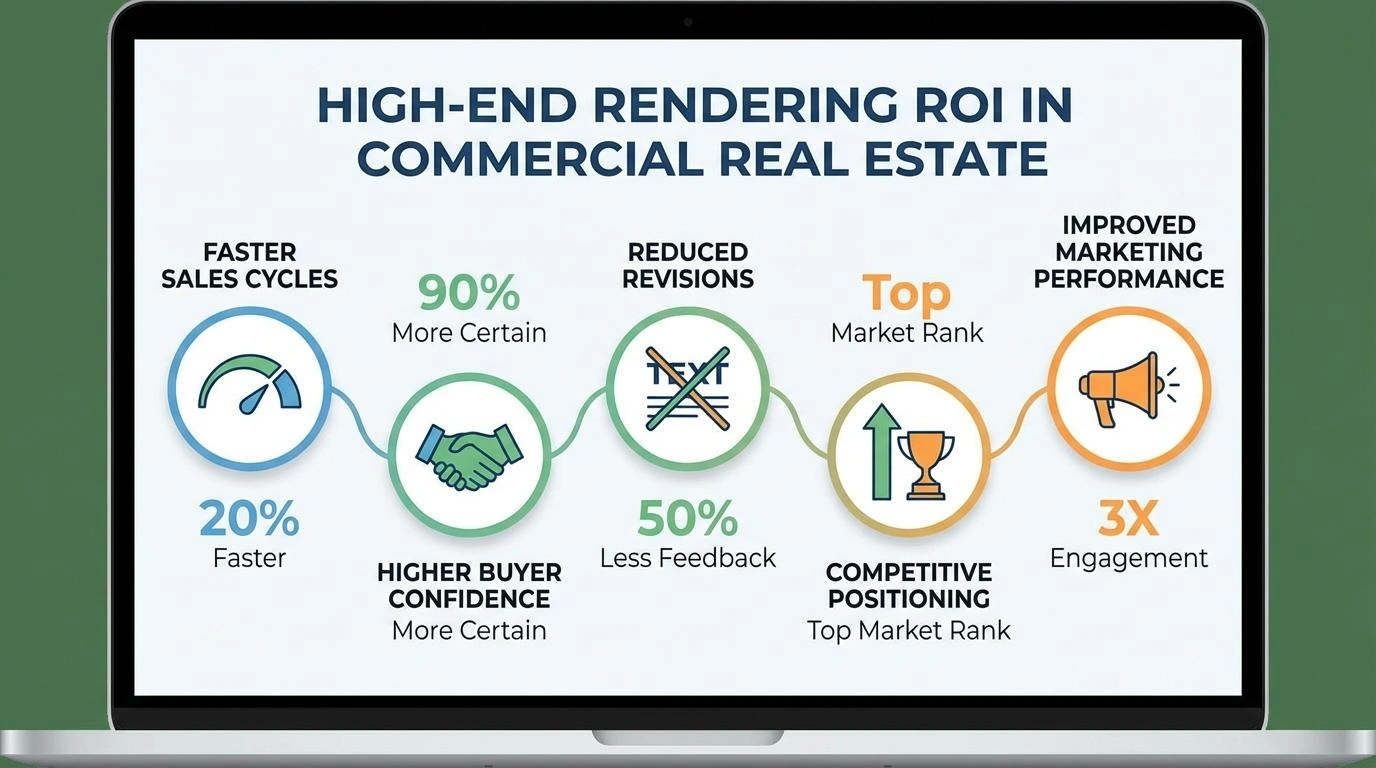
High-end rendering requires investment, but the return typically justifies the cost. Several indicators demonstrate commercial real estate ROI from quality visualization:
Rendering costs represent a small fraction of total project expenditure but influence a disproportionately large portion of sales outcomes. Poor visuals cost more in lost opportunities and extended sales timelines than quality renders cost to produce. Developers who view rendering as an expense rather than an investment often underperform in pre-sales.
Rendering allows design testing before construction locks in decisions. Developers can present multiple design options to stakeholders, test market reactions, and refine approaches based on feedback when changes remain inexpensive.
This flexibility proves valuable in phased developments where early phases inform later design decisions. 3D architectural visualization supports long-term planning by helping developers understand how different building phases will relate visually and functionally.
Market testing through visualization helps refine product-market fit before significant capital commitment. Developers can adjust unit mixes, finishes, or amenity offerings based on prospect feedback gathered during pre-sales campaigns.
Commercial rendering has evolved from a luxury presentation tool to a standard component of professional property development. The technology addresses fundamental challenges in pre-sales by making unbuilt projects visible and understandable to buyers and investors. As digital expectations continue rising across all industries, quality visualization will remain central to how developers communicate value and secure early commitments. The question facing developers is no longer whether to invest in rendering, but rather how to leverage it most effectively throughout the development process.