



Trying to picture a finished interior from flat blueprints or a collection of material samples is difficult. Clients struggle to visualize spatial relationships, and designers often face the challenge of communicating their vision clearly. This is where 3D rendering in interior design becomes invaluable.
3D rendering creates realistic digital images of interior spaces before any construction or renovation begins. It transforms architectural plans and design concepts into visual representations that anyone can understand. Architects, developers, and homeowners increasingly rely on this technology to make confident decisions. This guide explains what 3D rendering is, how it works, what it costs, and when it makes sense for your project.

3D rendering in interior design is the process of generating a realistic 2D image from a three-dimensional digital model. Think of it as creating a photograph of a space that does not exist yet.
The process involves two distinct stages. First is 3D modeling, where designers build the digital structure of the room including walls, furniture, fixtures, and architectural details. Second is the actual rendering, where materials, lighting, shadows, and environmental effects are added to create the final image.
The output quality varies based on project needs. Some renders serve as basic 3D interior visualization for internal review, while others achieve photorealistic interior rendering quality that looks indistinguishable from actual photographs. This is fundamentally different from traditional CAD drawings or hand-drawn sketches. CGI interior design allows for accurate lighting simulation, realistic material representation, and precise spatial relationships.
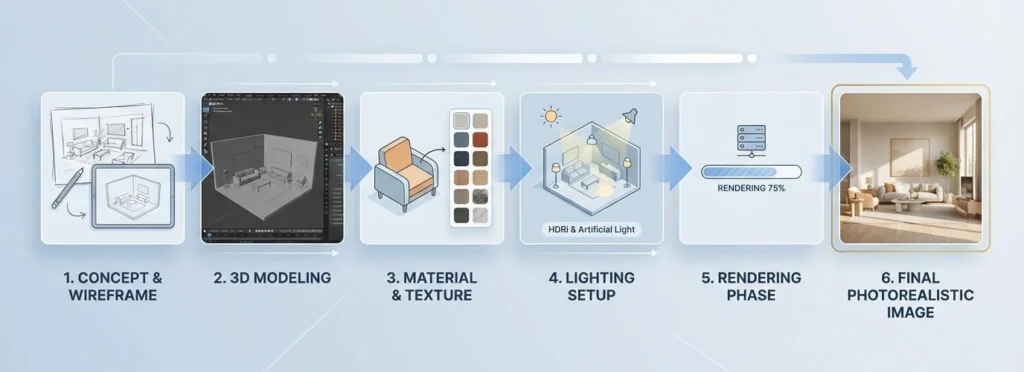
Understanding the interior rendering process helps set realistic expectations for timeline and deliverables. Here is how most projects unfold:
Most projects require one to two weeks for completion, though simple single-room renders may be delivered in a few days. Complex projects with multiple rooms and revision rounds can extend to three or four weeks.
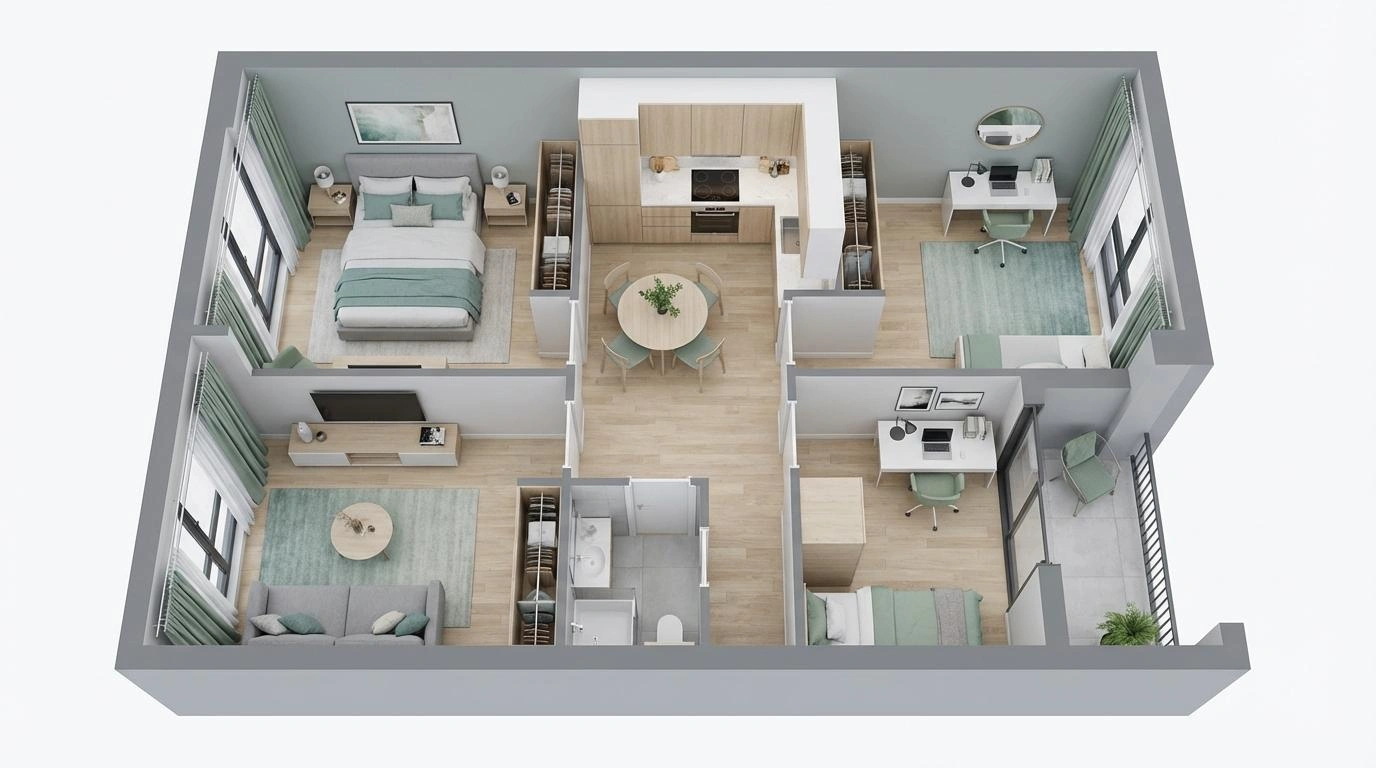
Different project needs call for different rendering outputs. Here are the most common types:
The choice depends on your audience and purpose. Marketing campaigns typically demand photorealistic quality, while internal design reviews often work well with faster, less refined renders.
The practical advantages of visualizing interior spaces extend across the entire project lifecycle:
For homeowners, 3D rendering removes the anxiety that comes with committing to expensive renovations without certainty about the outcome. For developers, it becomes a sales tool that helps buyers commit earlier in the development process.
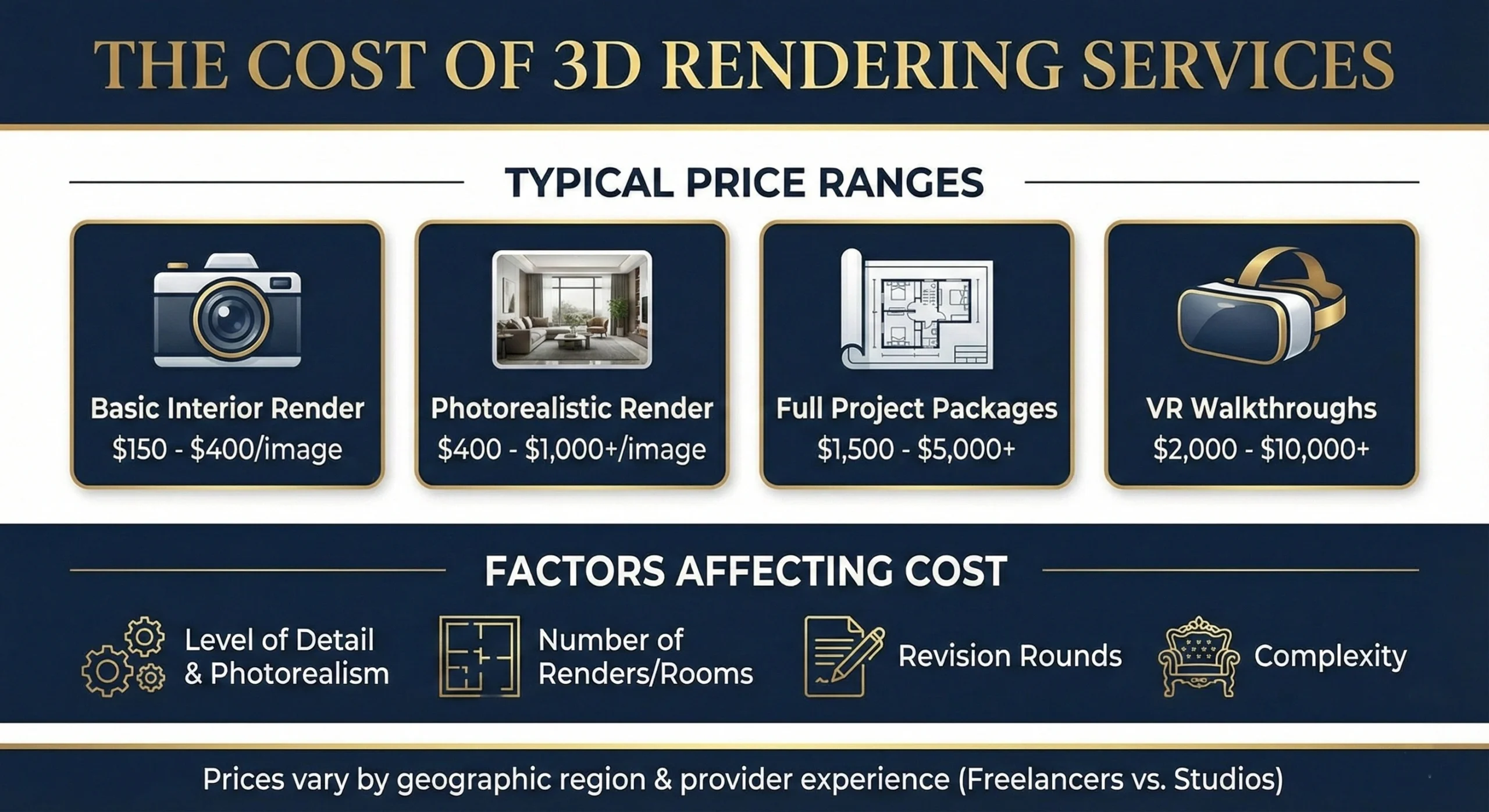
Budget planning requires understanding typical pricing structures for interior design rendering services. Here are current market ranges:
Typical Price Ranges:
Factors Affecting the Cost of 3D Rendering Services:
Prices vary significantly by geographic region and provider experience level. Freelancers typically charge less than established studios, though reliability and quality can vary.
Not every project justifies the investment in 3D architectural visualization. Consider rendering for these scenarios:
For minor updates like repainting a room or replacing light fixtures, 3D rendering is probably unnecessary. For projects involving significant financial investment or complex design decisions, the cost often justifies itself through reduced errors and faster approvals.

While powerful, 3D rendering has practical limitations worth understanding. The final quality depends entirely on accurate input data including precise measurements and correct material specifications. Screen colors may differ slightly from physical materials due to monitor calibration and lighting conditions.
Renders do not replace the need for physical material samples when texture and tactile qualities matter. The process also requires time in your project schedule and cannot be rushed without quality trade-offs or cost increases.
3D rendering in interior design has evolved from a luxury service to a practical tool for reducing project risk and improving communication. Whether you are an architect presenting concepts to clients, a developer marketing unbuilt properties, or a homeowner planning a major renovation, understanding how rendering works helps you leverage it effectively. The upfront investment typically saves time, money, and frustration by ensuring everyone shares the same vision before construction begins.