Call Us
+91 9301723973



Real estate marketing has traditionally depended on site photography. Developers wait for construction milestones, hire photographers, and use those images across brochures, websites, and ad campaigns. But this approach has limitations, especially when projects are still under development or haven’t broken ground yet. That’s where 3D renderings for real estate marketing come in. They don’t just replace photos they change how developers plan campaigns, engage buyers, and position properties in competitive markets.
Site photography works well for completed projects, but it struggles in several key areas:
When comparing 3D renders vs site photos, the main difference isn’t just visual quality. It’s about control, flexibility, and the ability to market earlier.
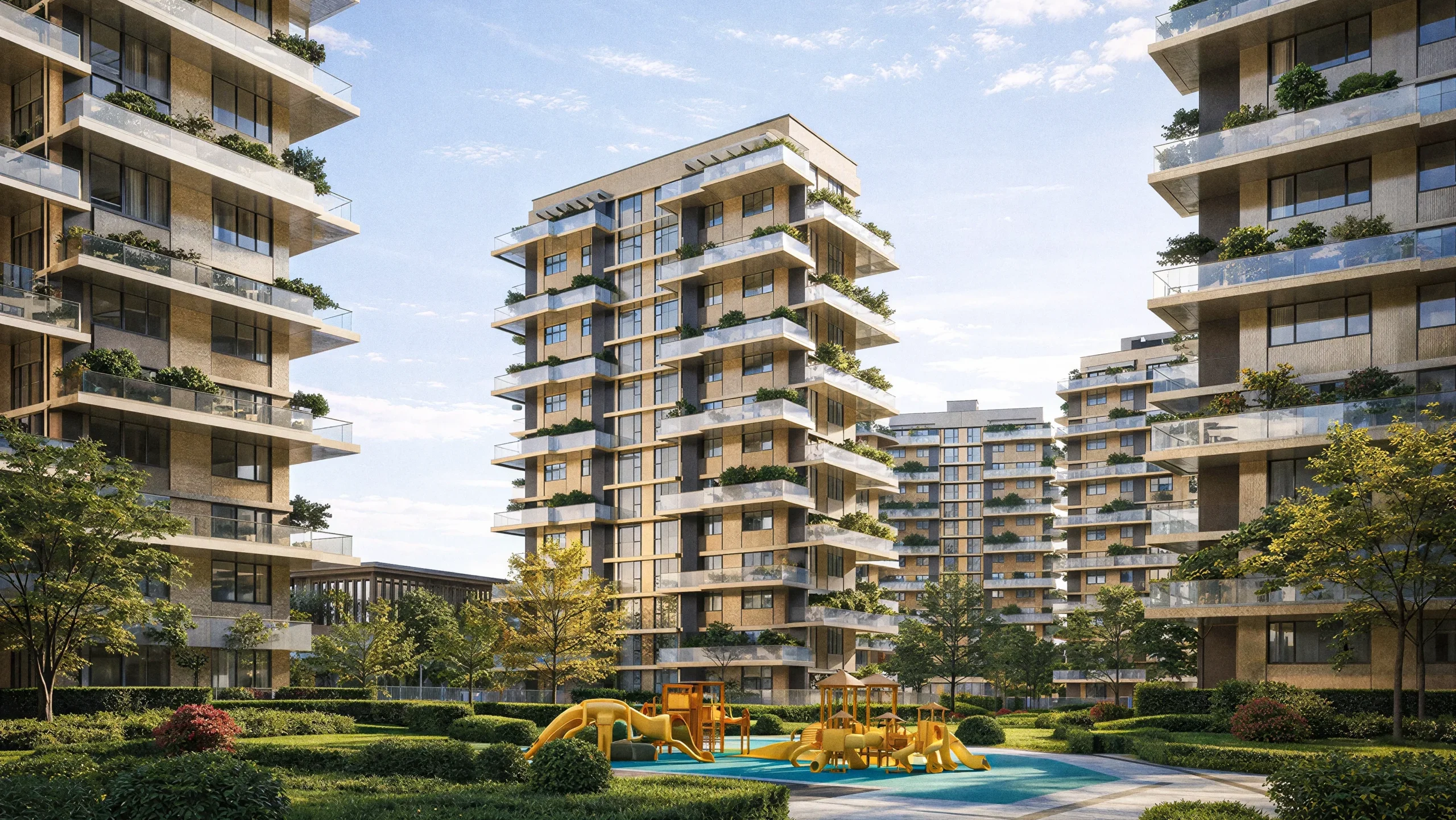
3D renderings for real estate marketing have shifted the entire campaign planning process.
The shift to 3D rendering for real estate marketing isn’t about replacing one tool with another. It’s about rethinking when and how campaigns begin. Developers no longer need to wait for physical progress to start generating interest. With 3D renderings for real estate marketing, marketing teams can launch campaigns before construction begins, test messaging with different buyer segments, and adjust visuals based on feedback without physical constraints.
This changes the marketing timeline entirely. Instead of planning a campaign around construction schedules, teams can align campaigns with market conditions, buyer demand, or funding milestones. The visuals are ready when the strategy is, not when the building is.
One of the biggest shifts is the ability to market properties that don’t exist yet. Real estate marketing before construction used to be limited to floor plans, concept sketches, and verbal descriptions. Buyers had to imagine the final product, which made it harder to build trust or urgency.
With 3D renderings for real estate marketing, marketing unbuilt properties feels more tangible. Buyers see realistic views of interiors, exteriors, landscaping, and amenities before any physical work starts. This is especially valuable for pre launch real estate marketing, where developers need to generate deposits or gauge interest before committing to full-scale construction.
Developers can use these renders to:

Studies on visual decision-making consistently show that buyers respond more strongly to realistic, contextual imagery than abstract plans or text descriptions.contextual imagery than abstract plans or text descriptions.
Buyers make decisions based on what they can see and understand. Site photos often leave gaps. A partially built property doesn’t show finished spaces. An exterior shot doesn’t explain interior flow. A single angle doesn’t reveal context.
3D renderings for real estate marketing solve these problems by offering clarity and imagination in one package:
This is especially true for interior and exterior visualization, where accurate lighting, materials, and spatial flow directly influence buyer confidence.
This combination makes decision-making faster. Buyers spend less time trying to visualize potential and more time evaluating whether the property fits their needs.
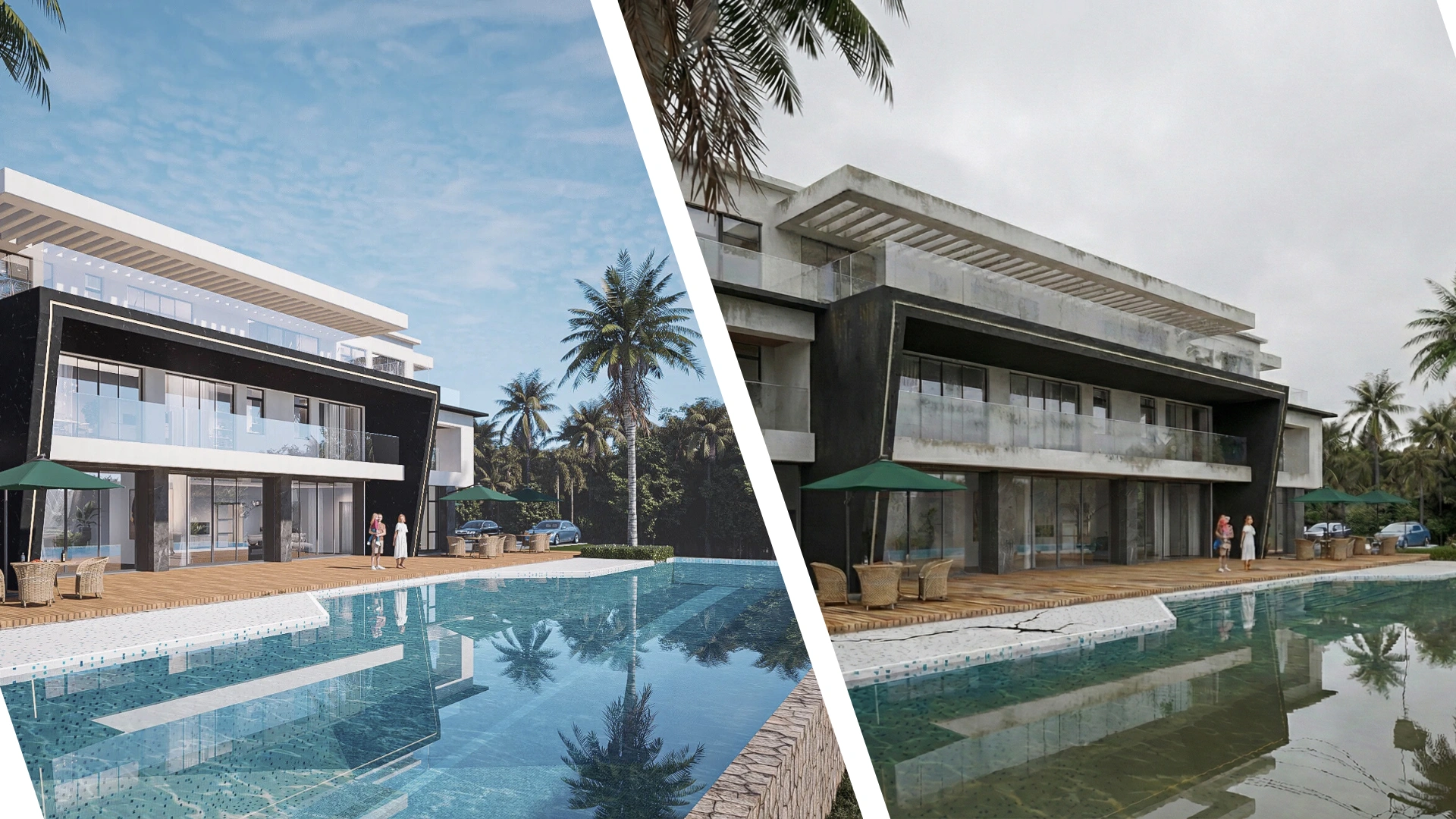
From a developer’s perspective, 3D renderings for real estate marketing offers practical advantages beyond aesthetics.
Cost control is one factor. A single photoshoot can cost thousands of dollars, and reshoots add more. With 3D renders, changes are made digitally. If a client wants to see a different color scheme, material, or layout, the render can be updated without travel, equipment, or weather delays.
Flexibility is another. Developers often need to show multiple design options to different buyers or investors. Site photos lock you into one version. Renders let you create variations quickly—different finishes, furniture styles, or even seasonal lighting.
Approval timelines also improve. When developers need visuals for regulatory submissions, investor presentations, or marketing approvals, 3D renders can be produced and revised faster than waiting for construction progress and coordinating photography.
There are specific scenarios where 3D renderings for real estate marketing are not just useful but necessary:
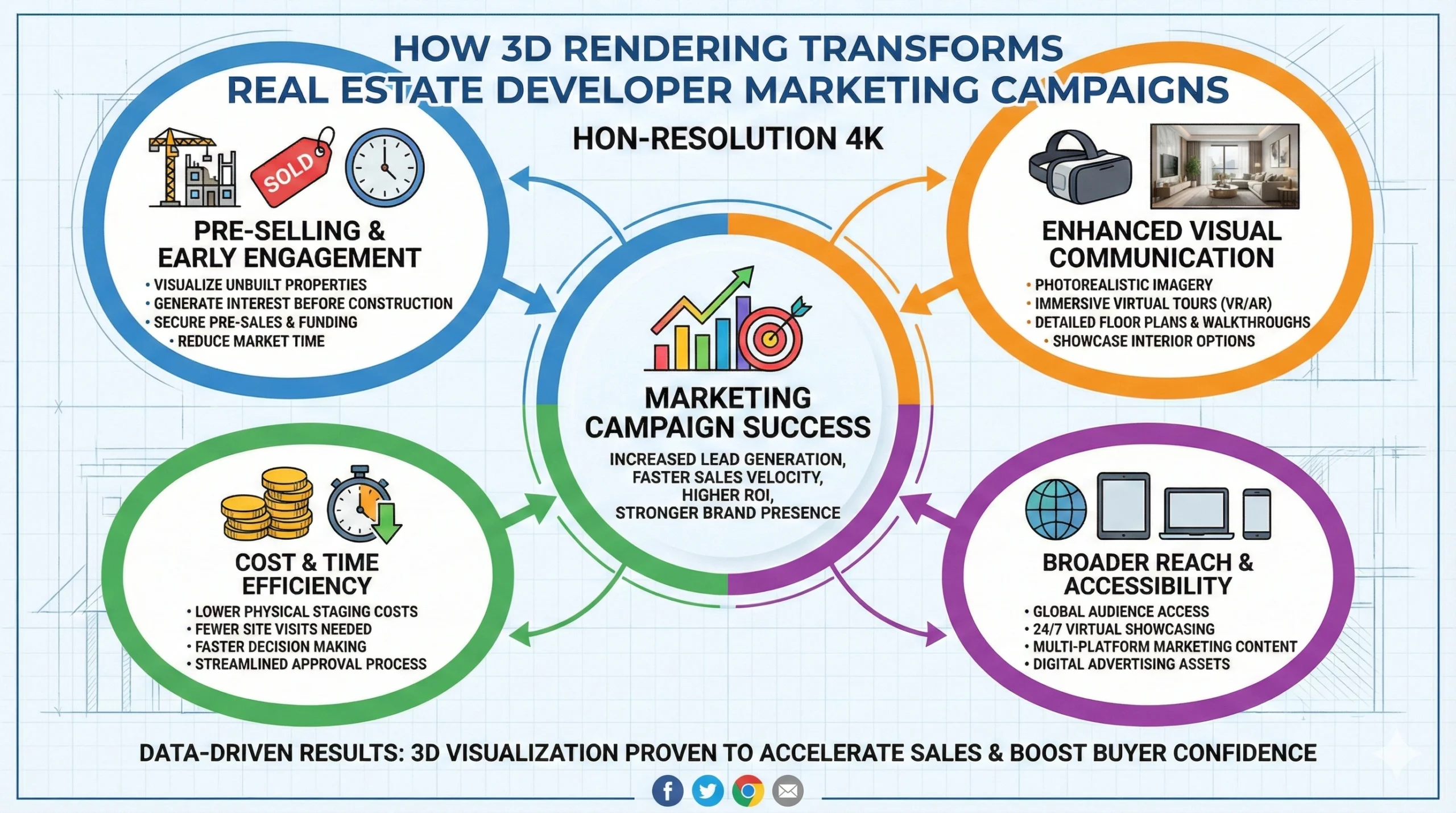
When teams switch to 3D renders, their workflows and strategies shift. Campaigns start earlier, often before construction begins. This means marketers can capture demand during planning phases, rather than waiting months or years for photogenic milestones.
Ad messaging also changes. Instead of focusing on construction progress updates, campaigns emphasize lifestyle, design, and location benefits. Renders support this by showing finished spaces in context, which resonates more with buyers than half-built exteriors.
Timelines become more flexible. Marketing teams can launch campaigns when market conditions are favorable, not when the site is ready for photography. They can also update visuals quickly if design changes, buyer preferences shift, or competitive positioning requires adjustments.
This adaptability means campaigns are more responsive to real-time feedback and market dynamics, which improves ROI and reduces wasted spend on materials that become outdated.
If you’re new to this space, our guide on what is 3D architectural visualization and how it’s used in real projects can help you understand the process better.
The shift from site photos to 3D renderings for real estate marketing isn’t just about better images. It’s about changing when campaigns launch, how buyers engage, and what developers can control. Renders remove the dependency on construction timelines, improve buyer understanding, and give marketing teams the flexibility to adapt quickly. For developers working on pre-construction projects or those looking to refine their positioning, 3D renders are becoming less of an option and more of a standard. The question isn’t whether to use them, but how to integrate them into a smarter, more responsive marketing strategy.