3D Interior Rendering Services
- Home
- 3D Visualization Services
- 3D Interior Rendering

3D Interior Rendering Services
When you’re working on an interior project, one of the hardest parts is helping other people see what you see. Floor plans and mood boards only go so far. That’s where professional 3D interior rendering services become essential. Clients want to understand the space before anything gets built. Investors want proof the design works. And sometimes, you just need to test whether your own idea holds up when it’s fully visualized.
That’s where we come in. We provide 3D interior rendering services that show exactly how a room will look once it’s finished. You send us your plans, materials, and references. We build the space digitally and deliver images that feel real enough to walk into.
Most of our clients are architects, interior designers, real estate developers, and business owners who need to present their projects before construction begins. Some are pitching to investors. Others are getting approvals from clients who struggle to read technical drawings. A few just want to make sure the design actually works in three dimensions before committing to it.
(New to architectural visualization? Read our complete guide to 3D archviz to understand the full process.)
When You Need 3D Interior Rendering Services?
The timing usually matters. You might need renderings for a client presentation next week, or you’re preparing marketing materials for a property launch. Maybe you’re stuck between two design directions and need to see both fully realized to make a decision.
We’ve worked with clients at every stage, from early concept exploration to final pre-construction visualization.
How It Makes Your Work Easier
What makes 3D interior rendering services valuable isn’t just that the images look good. It’s that they answer questions. Will this layout feel cramped? Does the lighting work with these finishes? How does the space flow when you’re standing in it?
A good rendering settles these questions before anyone picks up a tool. It helps you get faster approvals, fewer revision requests during construction, and more confidence in your design decisions.
Some of Our Work
We’ve included a few examples below to show the kind of work we do.
Benefits of Working With Us :
We’ve been providing 3D interior rendering services long enough to know what makes a project run smoothly and what causes unnecessary delays. Here’s what you can expect when you work with us.
– Clear Communication From the Start
We know how frustrating it can be to work with a rendering studio that doesn’t communicate clearly. You send files, wait days for a response, then get something that’s close but not quite right. Then you’re back and forth for weeks trying to fix details that should have been handled from the start.
We built our process to avoid that.
– Realistic Expectations
When you reach out, we respond quickly with clear questions about your project. We tell you exactly what we need from you, how long it will take, and what the deliverables will look like. No vague timelines. No surprises halfway through.
If something about your project will take longer than usual, we tell you upfront. If a detail you want isn’t possible within your timeline, we’ll suggest alternatives for that work.
– Fewer Revisions, Better Results
We ask the right questions at the beginning so we don’t waste your time later. What’s the primary use of this rendering? Who’s the audience? What mood are you going for?
This means fewer rounds of revisions. Most of our projects get approved after the first or second draft because we understood the brief properly from day one.
– We Respect Deadlines
If we commit to a delivery date, we hit it. Our clients often work under tight schedules, and a delayed rendering can derail an entire presentation or approval process. We plan our workload carefully so we’re never scrambling at the last minute.
– Consistent Quality Across Projects
Whether you’re ordering one rendering or twenty, the quality stays the same. We don’t rush through larger projects or cut corners to meet a deadline. Every image gets the same attention to lighting, materials, and composition.
Our 3D Interior Rendering Services Workflow :
Interior rendering is a detailed process, so we plan each stage carefully to ensure nothing gets overlooked. Here’s how we work from start to finish.
1. Technical Requirements for Interior Rendering
We need you to give us a clear formulation of your requirements from the beginning. Most architects and designers provide us with a 3D model, sketches or drawings, moodboards, and examples of finishing materials.
Sometimes clients send us 3D models that aren’t suitable for rendering in their current state. That’s not a problem. Our interior 3D artists can rework those models to make them production-ready. We’re comfortable working with whatever materials you have available.
Once we’ve gathered all the inputs, we move on to the next step.
2. Camera Position Setup
We need to find the best camera positions to show your interior in the most effective way. Some angles focus on specific details – a custom lighting fixture, a material transition, or a piece of furniture. Other angles present the full view of the space so viewers can understand the layout and flow.
We usually use several camera angles in our architectural 3D interior rendering projects. This gives you options and helps tell the complete story of the design.
3. Clay Render
This is a visualization with grey materials. We create the space according to your briefs, moodboard, and drawings or models. Everything is built and positioned, but without final colors or textures yet.
You provide us with adjustments on the position of objects and their dimensions at this stage. We make those changes before moving forward to the color preview. This saves time because we’re not redoing textured, fully lit scenes.
4. Color Preview
This is the first color image that includes all requirements and edits from the previous stage. We add texture overlays, adjust lighting, and apply color correction.
Textures and lighting are the two most important tools that help us make an image look real. Why don’t many people differentiate our 3D interior rendering projects from real photos? The secret is attention to every detail. We work on every fade, crease, reflection, and highlight until it feels right.
This stage is where the rendering starts to come alive.
5. Client Feedback and Corrections
Every step of the visualization process is tailored to your needs. With precise terms of reference and a clear project vision, you may not need extra revisions. If you don’t, we take them out of the scope of the project.
We can customize the number of previews and add more review sessions as needed. Most projects go through two or three rounds of revisions, but we stay flexible based on what your project requires.
6. People Cutout Integration
We insert people at this stage. For ordinary static interior 3D architectural visualization, we use 2D people. For panoramas and certain types of projects, we use 3D people.
Recently we’ve been getting a lot of requests to insert pets into architectural interior visualizations. It helps convey the comfort and lived-in feel of the home. These small touches make a big difference in how relatable the space feels.
7. Final Delivery of Interior Rendering
We deliver final images in 4k Resolution. The average project implementation time is two and a half weeks, but it depends on the scale and complexity of your project.
Our project manager is responsible for all communication, both within the artist team and with you. The project manager also sets up all stages and schedules to meet your deadline.
Our art director controls the artistic component and the technical implementation of the architectural 3D interior rendering. The responsibility of our team is to avoid any misfires in our collaboration.
If you have any questions about our services or workflow, feel free to contact us.
Types of 3D Interior Rendering Services
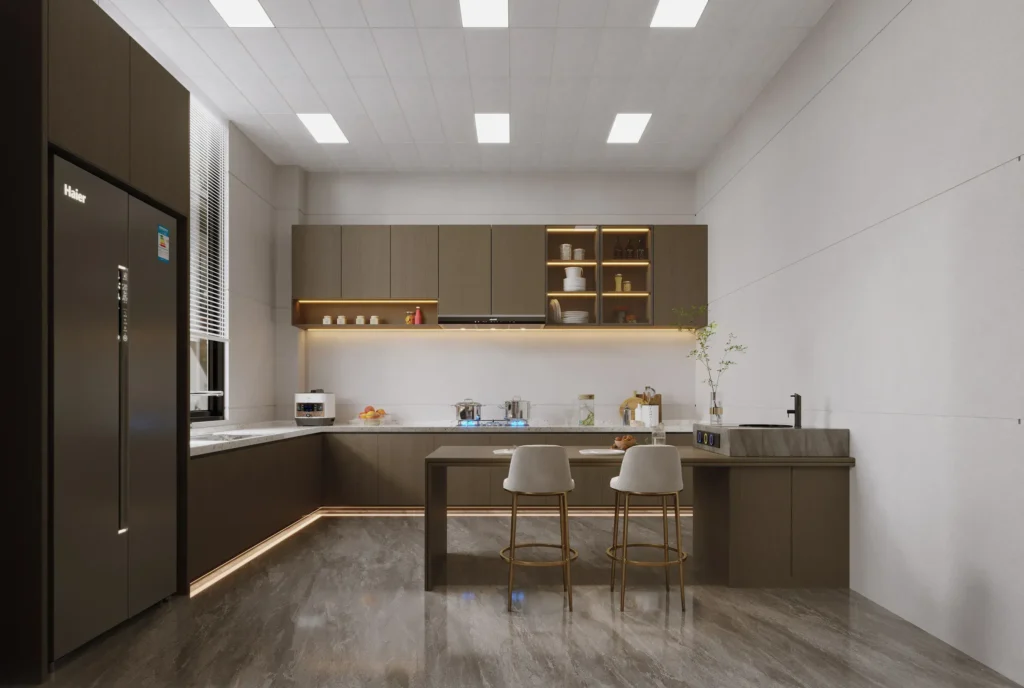
1. Kitchen Interior
Rendering
Kitchens are one of the most requested interior renderings we do. Clients need them for residential developments, hospitality projects, and commercial spaces where the kitchen is part of the customer experience.
What Decisions It Helps With
You’ll see if the cabinetry feels too heavy or too light for the space. You’ll know whether the backsplash complements the countertops or clashes with them. And you’ll get a sense of how natural light interacts with the materials throughout the day.
What We Focus On
We pay close attention to material accuracy in kitchens. Countertops, cabinetry, tile work, and appliances all need to look realistic. We also make sure the lighting feels right, whether it’s pendant lights over an island or under-cabinet strips.

2. Living Room Interior Rendering
Living rooms are the heart of most residential projects. They set the tone for the entire home, and clients want to make sure that tone is exactly right before construction begins.
What Decisions It Helps With
A rendering shows whether the furniture layout works with the room’s proportions. It reveals how the color palette feels when everything’s together. And it clarifies whether the space will feel open and airy or warm and intimate.
What We Focus On
We focus on composition and balance. Living rooms have a lot of elements -seating, lighting, decor, textures-and they all need to work together without feeling cluttered. We also pay attention to how light enters the space and how it affects the mood.
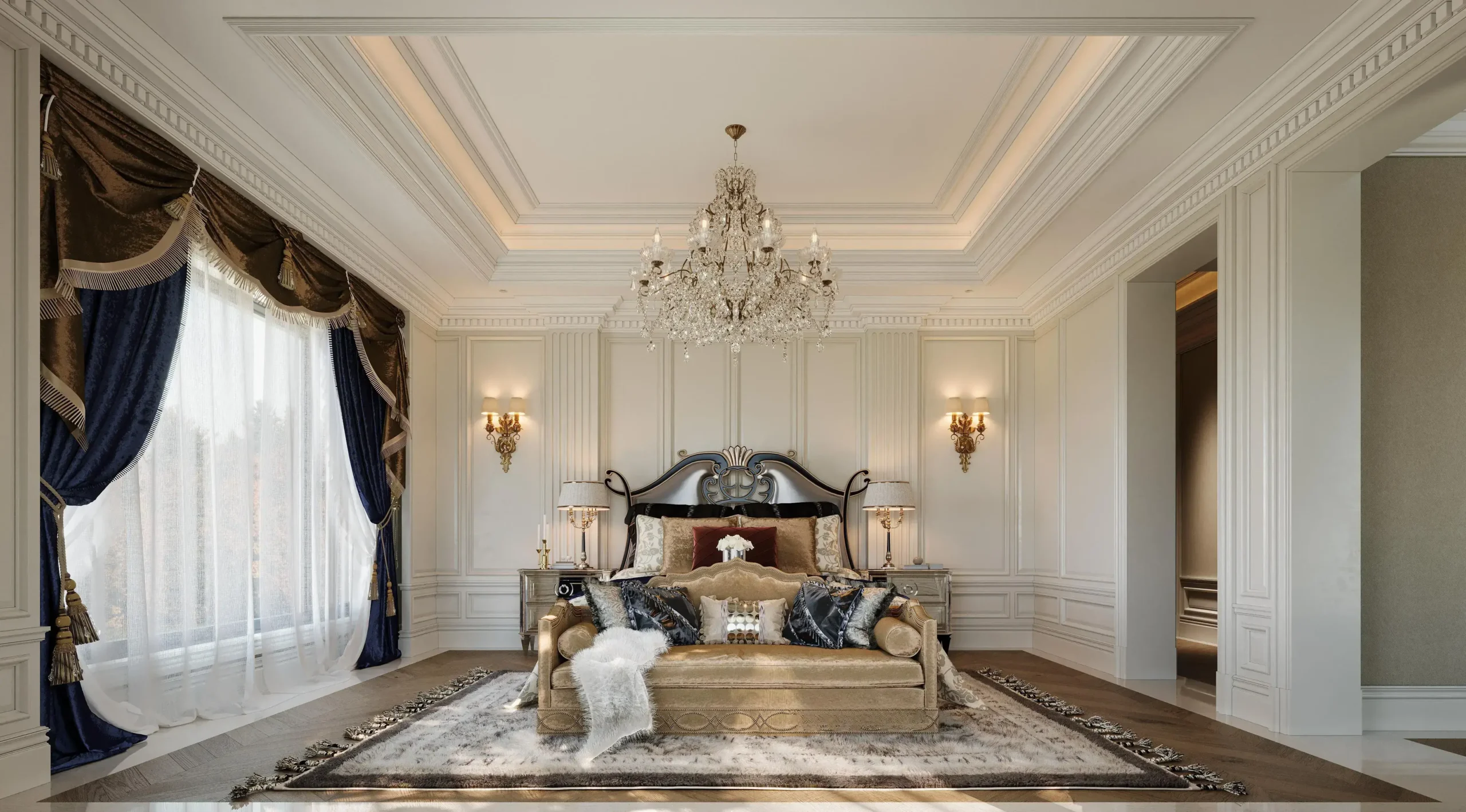
3. Bedroom Interior Rendering
Bedrooms are personal spaces, and the rendering needs to reflect that. Whether it’s a master suite in a luxury development or a compact bedroom in an apartment building, the goal is to show comfort and functionality.
What Decisions It Helps With
You’ll see if there’s enough room around the bed for movement. You’ll know whether the lighting plan works for both ambiance and practicality. And you’ll understand how the finishes and textiles contribute to the overall feel.
What We Focus On
We focus on softness and warmth. Bedrooms need to feel inviting, so we pay extra attention to how fabrics render, how the bed looks styled, and how the lighting creates a calm, restful mood.
4. Restaurant Interior Rendering
Restaurant renderings are different from residential work because they need to show atmosphere and experience, not just design. Clients need to communicate a concept, a vibe, and a reason for people to visit.
What Decisions It Helps With
A restaurant rendering shows whether the seating layout maximizes capacity without feeling cramped. It reveals how the lighting sets the mood. And it demonstrates whether the design concept translates into a space people will actually want to spend time in.
What We Focus On
We focus on ambiance. Restaurants are experiential, so we pay attention to how the lighting feels at different times of day, how materials contribute to acoustics and warmth, and how the space balances style with functionality.
Why Our 3D Interior Rendering Services Work
– Clearer Client Approvals
When your client can see the finished space in photorealistic detail, they approve faster. There’s less back-and-forth about whether a color will work or whether the layout makes sense. They’re looking at the answer, not imagining it.
– Fewer Design Changes During Execution
Changes during construction are expensive and time-consuming. When you’ve already visualized the space in 3D, you catch problems early. You see that the sofa won’t fit, or the lighting feels off, or the materials don’t work together. You fix it before anyone breaks ground.
– Better Presentations to Buyers or Stakeholders
Whether you’re presenting to investors, planning committees, or end buyers, a strong rendering makes your case better than any floor plan can. It shows confidence in the design. It answers questions before they’re asked. And it makes your project more memorable.
– Confidence Before Construction Starts
There’s a difference between hoping a design will work and knowing it will. A good rendering gives you that certainty. You’ve seen the space from multiple angles. You’ve tested the lighting. You’ve confirmed the materials. When construction starts, you’re not guessing.
Software We Use
We use a combination of industry-standard tools to deliver our 3D interior rendering services with accuracy and consistency. Each piece of software plays a specific role in our workflow, and together they let us deliver consistency across every project.
3ds Max is our primary modeling and rendering platform. We use 3ds Max to build the architectural structure, place furniture, and set up cameras. It gives us precise control over every element in the scene.
When clients send us SketchUp models, we can import them directly and refine them for rendering. SketchUp is also useful for quick spatial studies early in the process.
Blender
We use Blender for certain modeling tasks and as a secondary rendering option when a project calls for it. It’s a flexible tool that integrates well with our pipeline.
Corona Renderer is our main rendering engine. It handles lighting, materials, and camera settings with a level of realism that’s hard to beat. We’ve spent years fine-tuning our Corona setups to produce consistent, photorealistic results.
V-Ray
We also use V-Ray for projects where we need fast, interactive feedback during the design process. It’s particularly good for interior scenes with complex lighting.
Every rendering gets post-processed in Photoshop. We adjust colors, balance exposure, add depth, and refine details. This final step is what makes the difference between a technical render and an image that feels real.
These tools help us maintain accuracy and consistency, but they’re just tools. What matters is how we use them to solve the specific challenges of your project
.
Cost of 3D Interior Rendering
Why Prices Vary
Not every project costs the same, and that’s because not every project requires the same amount of work. A simple bedroom rendering with standard finishes takes less time than a complex restaurant interior with custom lighting and intricate details.
What Affects the Cost
The main factors are the size of the space, the level of detail you need, the number of revisions, and how quickly you need it delivered. If you’re working with custom furniture or unusual materials, that takes extra time to model and texture accurately.
Rush projects cost more because we need to prioritize your work over other scheduled projects. Multiple camera angles cost more than a single view.
Ready to See Your Interior Design in Photorealistic Detail?
If you’re presenting to clients, pitching to investors, or finalizing design decisions, we’ll help you show your project the way it deserves to be seen.
Let’s discuss your project. Tell us what you need, and we’ll walk you through how we can help.
Get in touch today we typically respond within a few hours.


1. Kitchen Interior
3. Bedroom Interior Rendering
4. Restaurant Interior Rendering